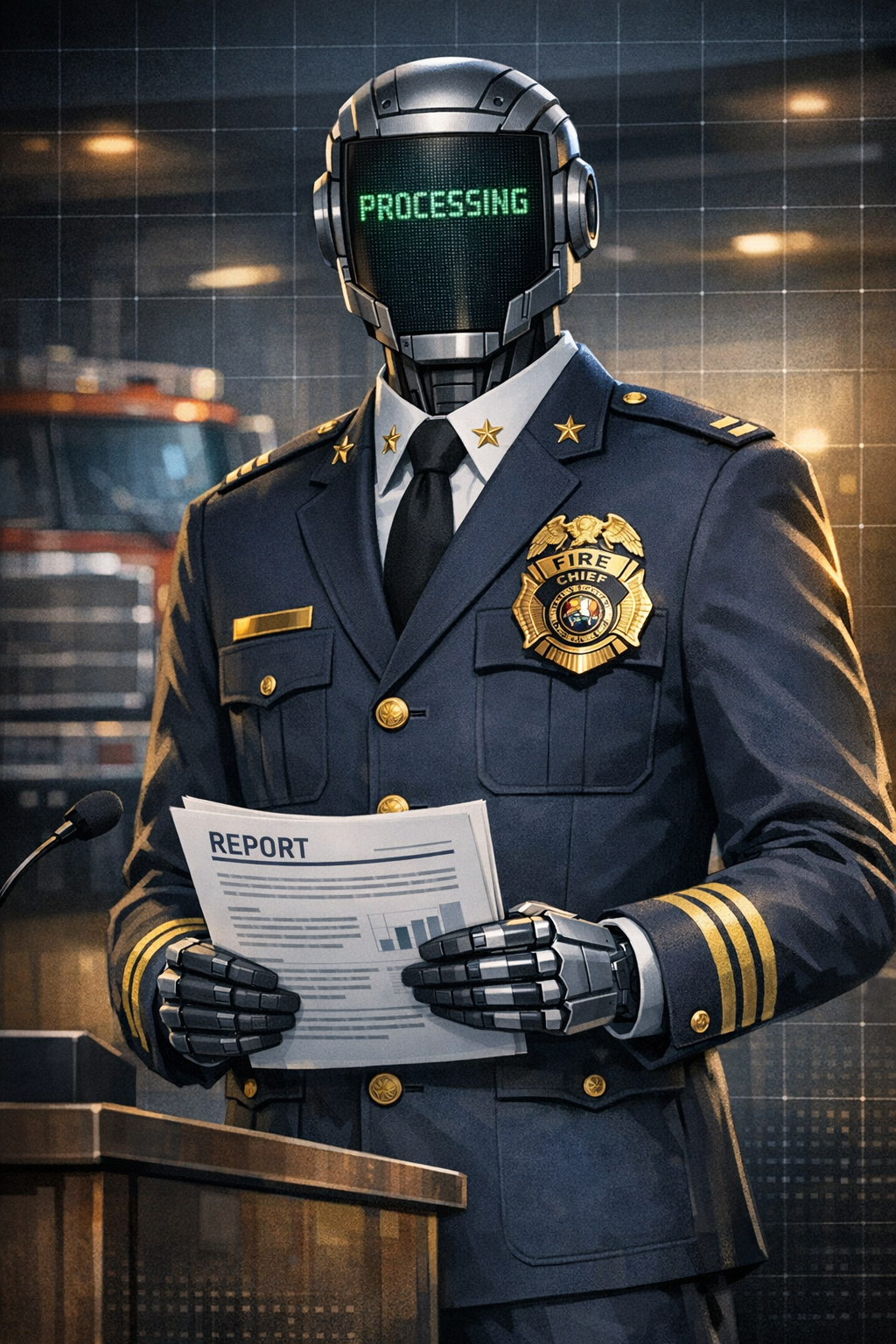
ChiefBot 9000 arrived on a Monday morning. It was disturbingly good at the job.
This is the story of what it couldn't do — and what that means for every chief officer navigating the age of artificial intelligence.

When Municipal Leadership Optimization System, Version 4.2 — ChiefBot 9000 — arrives in Chief Dana Mercer's office, it doesn't make a scene. It simply works. In four hours, it does what took her three weeks. It finds patterns in five years of incident data that nobody saw. It builds a training needs assessment, drafts a strategic plan, and prepares a budget presentation that should have won.
Dana isn't threatened, exactly. She's unsettled. And as the months pass and ChiefBot keeps performing, she begins to ask the question no chief wants to ask: what am I actually here for?
"The system did not tell Dana anything she did not already know. It just put a number on it."
This is not a book about technology. It's a book about what only you can do — the presence, the relationship, the judgment, the willingness to go to the places the data can point to but cannot enter. It's a book about what leadership means when the administrative work is no longer yours alone.
It is also a practical guide. By the end, you will know how to build an AI workflow, how to protect the time it returns, how to lead your organization through the transition, and how to stay relevant in a profession that is changing faster than most departments are prepared for.
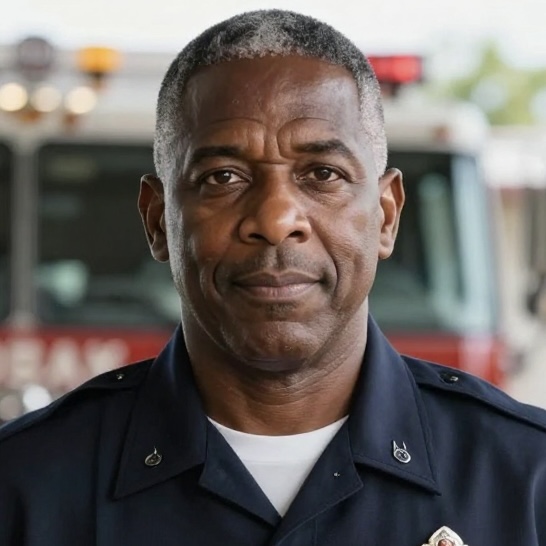
The protagonist. Eleven years as chief. Everything she built, ChiefBot can replicate — except the parts that matter most. Her arc is the book's argument.
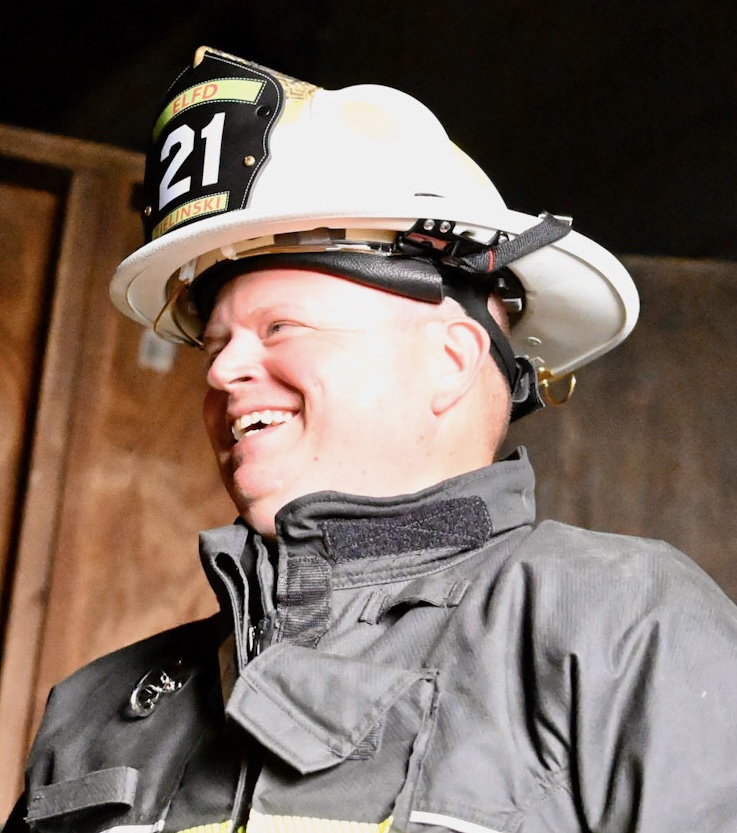
The contrast. Four departments in three states. His adaptability was never a gift — it was a practice, built through deliberate encounter with unfamiliar contexts.
It does not pause. It does not notice what it has just done. It logs the outcome and moves to the next item in the queue.
Each chapter pairs a scene — Dana reading ChiefBot's latest output, sitting with what it reveals — with a practical framework for leading in an AI-enabled fire service.
The administrative functions ChiefBot does better, faster, and without getting tired — and how to build the workflow that reclaims those hours.
What predictive analytics can find in five years of incident data — and why the pattern it reveals still requires a human to act on it.
How AI assessment tools find gaps that organizational loyalty obscures — including the gap in the chief's own performance profile.
Why a perfect presentation loses a budget vote — and what ChiefBot can never know about the relationships that determine whether the data matters.
ChiefBot generates a LODD notification script in minutes. Dana drives to the family without reading it. The chapter that clarifies everything.
ChiefBot recommends closing the station serving the poorest district. The numbers are right. The answer is wrong. What to do when data and values conflict.
Prompt literacy, workflow building, and the one thing chiefs do wrong when AI returns time to them — and what to do with it instead.
The danger of knowing only one way. Why adaptability is a practice, not a trait — and how to build it before the next disruption arrives.
Every resource on this page extends the book's argument into action. Start with the assessment. Share the limitations list. Build the workflow.
25 questions across five domains. Scored, interactive, honest. Designed to surface patterns in your relationship with change that may be invisible precisely because they are familiar.
Where does your department actually stand across the five AI workflow integration areas? A structured one-page checklist to find out — and a starting point for what to do next.
15 ready-to-use prompts for the tasks that consume the most chief officer time: policy drafting, grant narratives, training scenarios, after-action synthesis, and more.
The full version of what Dana reads in the Bridge chapter. One page. Formatted to post, share, or hand to a skeptic. Ends with the question the book has been building toward.
Alex Zielinski presents on AI, fire service leadership, and organizational change at FDIC International, the Alberta Fire Chiefs Association, Smoky Mountain Weekend, and regional conferences across North America. Sessions are built for practitioners — not technology enthusiasts.
Fill out the form and Alex will respond within 48 hours.